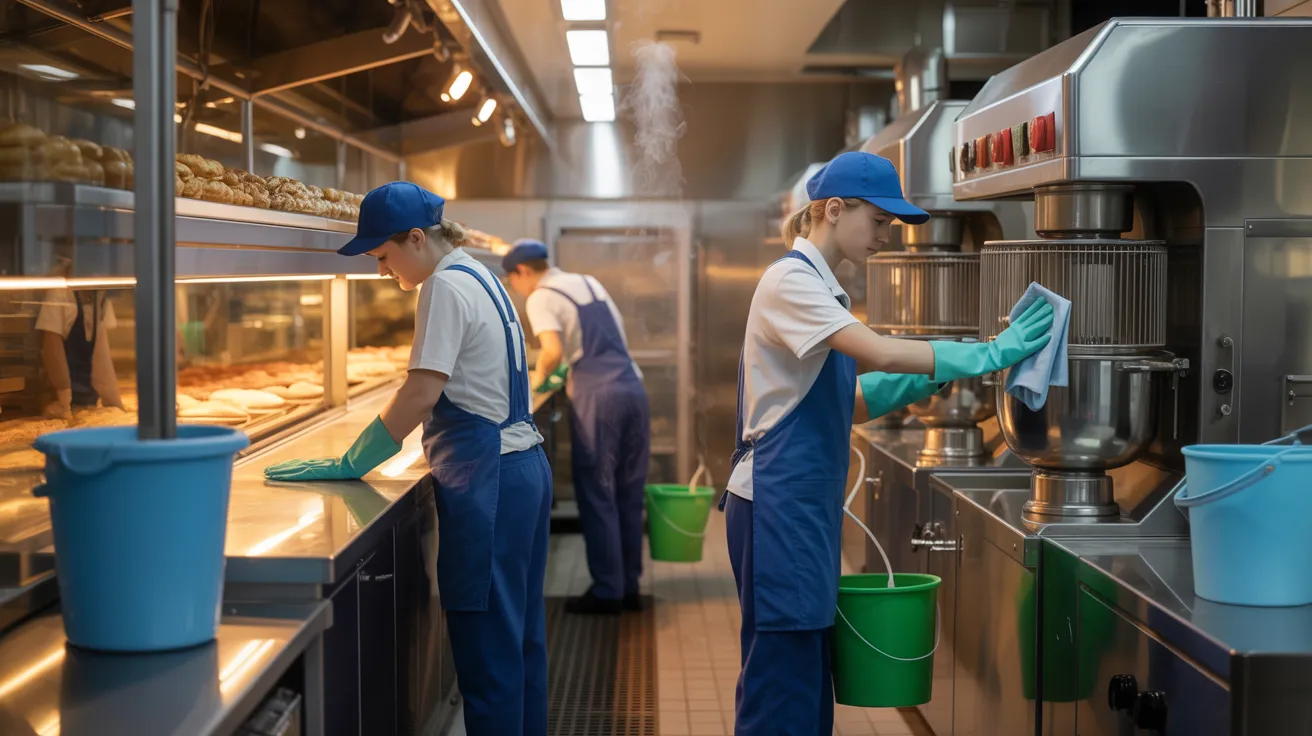
Professional sanitation and food hygiene professionals in Brampton support food establishments, food centers, baking facilities, warehouses, and food service operations staying compliant. They sanitize regularly touched surfaces, food contact areas, equipment, floors, drains, restrooms, and food handling spaces with approved chemicals, maintaining proper ratios, and recording exposure duration. You require regular sanitation determined by hazard level, food throughput, food allergies, and inspections, plus verification records backing Hazard Analysis Critical Control Points, quality reviews, and regulatory adherence. The sections below explains how effective cleaning systems must contain.
Essential Summary
- Food safety cleaning professionals in Brampton work with restaurants, grocery departments, commissaries, warehouses, bakeries, schools, mobile vendors, and allergen-sensitive operations.
- They disinfect high-touch surfaces, food-contact equipment, kitchens, floors, drains, restrooms, and storage areas using sectional methods to prevent cross-contamination.
- Filing of finishing through tests, assessments, and remedial documentation validates certified vendors have validated proper chemical concentration, suitability, and exposure duration.
- Optimal sanitation calendars take into account hazard, throughput, transitions, spills, and regulations when assigning daily, periodic, and seasonal activities by section.
- Select contractors with hazard analysis knowledge, sanitation, competency, WHMIS, instruction, insurance, testimonials, color-coded tools, and compliance-ready cleaning files.
Which Brampton Venues Need Food Safety Cleaning?
Food safety cleaning is essential for any Brampton facility that deals with, keeps, prepares, packages, or provides food. Apply it to your establishment if it falls within health oversight, food standards, or HACCP systems. This includes food service venues, employee dining, supply facilities, retail sections, butcheries, seafood counters, retail shops, and facility kitchens.
You also need documented food sanitation in storage facilities, food production centers, refrigerated locations, bakery retailers, school meal programs, event venues, and food distribution hubs. Portable and seasonal businesses count too, including mobile kitchens, festival sellers, and temporary food stands. If your staff handle ingredients, section prepared foods, heat finished items, or keep allergens stored, your facility needs written cleaning standards. In Brampton, cleanliness isn't optional; it's part of regulatory, business, and safety compliance.
What Do Brampton Cleaning Professionals Handle?
You need cleaning experts who sanitize high-touch surfaces, kitchens, floors, and bathrooms to meet food safety and public health standards. associated article They target these areas because they pose the greatest danger for contamination spread, slip hazards, and sanitation breaches.
By knowing exactly what gets cleaned, you are able to confirm your operation's sanitation protocols meet compliance standards.
Emphasizing High-Touch Surface Cleaning
Addressing high-touch surface sterilization is vital for Brampton cleaning teams because contact points can spread microbes and organic matter within a space. You need a formal plan for cleaning door handles, push plates, switches, railings, shared equipment controls, POS terminals, and refrigerator pulls. Applying contact point analysis, professionals determine every commonly touched zone and determine cleaning schedule
using sequential systems, and separating cleaning materials by zone
Cooking Zones, Walking Surfaces, and Restroom Environments
Expect Brampton cleaning experts to target kitchens, floors, and restrooms because each area carries unique foodborne illness prevention, slip-and-fall, and public health risks. In industrial kitchens, you need degreasing on cook lines, equipment exteriors, drains, prep surfaces, and splash zones to minimize contamination and pest pressure.
Floor care that is documented should also be anticipated. Technicians clean and remove buildup from tile grout, ceramic surfaces, and vinyl floors, then apply correct drying techniques so you can limit falls and meet regulatory standards. They also address entry points where dampness and dirt enter the building.
In restrooms, cleaners treat contact surfaces, bathroom hardware, partition walls, accessory dispensers, and receptacles then refill supplies and eliminate odor. They also service restaurant moprooms, where chemical storage, sink hygiene, and drainage conditions can affect sanitation compliance and staff safety daily.
Why Food Safety Cleaning Matters in Brampton
Brampton businesses need to implement proper sanitation practices for meeting health code requirements and obtaining approval. You also minimize bacterial spread through proper cleaning of food-preparation surfaces, appliances, and frequently-touched items. Most importantly, you safeguard public health by lowering the risk of foodborne illness in your facility.
Food Safety Regulations
Since Brampton food businesses must follow rigorous sanitary regulations, your food safety cleaning directly impacts your ability to meet health codes, defend diners, and sidestep regulatory penalties. You must maintain sanitized food contact points, recorded sanitation plans, proper chemical use, and verifiable staff procedures that align with municipal and provincial inspection expectations.
During inspections of your operation, regulators determine if your cleaning program ensures secure product handling, appliance cleanliness, waste handling, and restroom sanitation.
Cross-Contamination Prevention
Meeting health code standards also depends on your ability to prevent cross-contamination during routine food preparation and sanitation. You must keep raw items away from prepared dishes, sanitize prep surfaces between tasks, and keep cleaning products separate from food areas. Clear procedures reduce transfer risks and support consistent compliance during inspections.
Building allergen segregation prevents key allergens from reaching shared surfaces, containers, or equipment. Utilize dedicated cutting boards, color-coded tools, and precise instrument labeling so team members won't blend products in cooking or serving.Enforce handwashing after handling uncooked meats, shellfish, egg items, or allergen substances. Swap wiping cloths regularly, and confirm sanitizer strength with test strips. When you train staff to follow these controls every shift, you foster a cleaner, more secure operation that meets Brampton's food safety expectations daily.
Community Health Safety
Should cleaning standards break, you don't simply encounter inspection problems—you increase the potential of contamination-related sickness impacting customers, staff, and the wider Brampton community. You also undermine your responsibility in safeguarding community wellness, especially in high-traffic food premises where pathogens travel quickly through surfaces, equipment, and touchpoints.
You need cleaning protocols that remove soils, disinfect properly, and confirm effectiveness. That means following exposure periods, using approved disinfectants, recording cleaning times, and training staff to meet regulatory standards. These measures facilitate disease prevention by lowering microbial loads before they contaminate surfaces or food. In Brampton, strong sanitation protects vulnerable populations, limits outbreak potential, and helps you demonstrate due diligence. When you maintain proper standards, you don't just meet regulations—you substantially decrease danger and promote secure food handling throughout the region.
How Can Cleaning Practices Ensure Food Safety Compliance?
Adopting thorough cleaning protocols solidifies food safety compliance by lowering contamination exposure, limiting pathogen development, and maintaining your facility's adherence to sanitation requirements under HACCP-based programs and public health regulations. You confirm that contact surfaces appear visibly clean and microbiologically controlled, facilitating documented preventive controls and inspection readiness.
Conscientious cleaning moreover solidifies allergen management by eliminating residues that can trigger undeclared allergen exposure. When you match established sanitation practices with compliance training, your staff can implement uniform procedures, employ approved chemicals accurately, update records properly, and manage discrepancies in advance of they escalate. Consistent cleaning enables audit trails, confirms corrective steps, and shows accountability when audited. Moreover, it supports you safeguard product quality, copyright compliance standards, and lower the likelihood of compliance actions, product recalls, grievances, and avoidable health hazards.
Determining When to Arrange Commercial Cleaning
Cleaning plans perform optimally when you set them according to risk levels, output volume, and compliance needs rather than relying on a fixed calendar alone.
Drain systems, vents, storage racks, and hard-to-reach zones call for every week or every month service, informed by inspection results and sanitation documentation.
What Should You Look For in Brampton Cleaning Experts?
Screen providers initially by their food hygiene standards—not budget alone. You need to confirm that every company meets CFIA, public health, and HACCP standards for your operation. Demand insurance verification, WHMIS compliance, training records, and management systems. Evaluate technician understanding of contamination dangers, chemical safety, and documented sanitation practices.
You should also assess operational reliability and accountability. Request references from food facilities in Brampton, then examine response times, corrective-action procedures, and communication standards. Confirm the company supports supplier audits and can present inspection-ready documentation when regulators or third parties request evidence. Check whether equipment is maintained is performed, color-coded implements are used appropriately, and site-specific hazards are recognized. A qualified provider protects regulatory adherence, product integrity, and your brand reputation.
Which components are contained in a Food Safety Cleaning Plan?
Develop a written strategy that makes clear every sanitation task, standard, and responsibility prior to production start. You should outline cleaning frequencies, approved chemicals, dilution rates, contact times, tools, and verification methods for each location, surface, and apparatus. Incorporate pre-operational inspections, corrective actions, and employee training requirements.
Your plan should also tackle prevention of contamination, waste management, pest-control tactics, and scheduled records for restrooms, drains, floors, and food-contact areas. Specify how you'll separate raw and ready-to-eat processes, support ingredient tracking, and maintain accurate allergen labeling through validated cleaning between product changes. You should assign accountability, keep signed records, and assess results against regulatory standards, HACCP controls, and customer requirements. When gaps appear, modify procedures immediately and retrain staff.
Frequently Asked Questions
Will cleaning services handle overnight shifts at Brampton facilities?
If you operate controlled facilities, you'll also require records that enable audits and maintain compliance.
Can sanitation professionals manage emergency spill response?
Yes, you can locate Brampton sanitation experts providing spill response options. They manage contamination, evaluate risks, isolate contamination, and begin swift decontamination to reduce risk and prevent business disruption. You should confirm timeframes, certifications, PPE measures, and disposal methods. If your facility must adhere to regulations, pick a provider that tracks incidents, adheres to standards, and ensures audit compliance.
Will plant-based disinfectants sanitize safely food preparation areas?
Definitely, natural disinfectants work safely on food preparation areas if you source solutions certified for food use that adhere to regulatory compliant. You need to verify contact duration, dilution rates, and rinsing needs ahead of deployment. Plant-derived products reduce toxic chemical contact, but you need evidence of effectiveness against relevant pathogens. To keep surfaces residue-free, adhere to precise manufacturer instructions and validate your disinfectant meets applicable food industry sanitation standards.
Will sanitation programs adjust for seasonal shifts?
Yes, you can modify maintenance plans for seasonal shifts. You should adjust timing, personnel, sanitizers, and testing procedures to match seasonal workflows while sustaining regulatory adherence. You'll reduce equipment downtime by scheduling disinfection around equipment transitions, peak volumes, and usage patterns. You should additionally update SSOPs, staff education, and facility monitoring to account for periodic risks, new allergens, or increased soil loads. Regular reviews preserve your strategy efficient.
Do professional cleaners instruct staff members in proper hygiene techniques?
Yes, commercial cleaners often train your team on sanitation best practices. You get staff training on proper chemical use, exposure periods, contamination control, machine breakdown, and record keeping. They generally follow training with HACCP, GMP, and CFIA or regional health department requirements. Many perform hygiene inspections to confirm adherence, spot deficiencies, and reinforce corrective actions. This helps you maintain consistent procedures, succeed in audits, and minimize contamination hazards daily.
Final Thoughts
When you work with Brampton food safety and commercial cleaning specialists, you don't just tidy up—you keep your operation inspection-ready and your protocols above board. From processing areas to kitchen spaces, every clean surface and maintained area helps reduce unwelcome guests and avoid expensive problems. By arranging cleanings at the right intervals and adhering to a detailed cleaning schedule, you protect employees, patrons, and your reputation. In a strict regulatory setting, clean spaces are essential—they're part of doing business right.